Blue Light and Bloating: The Surprising Connection Between Your Screen Time and Your Digestion
By Dr. Bhate’s Gastro Liver Clinic
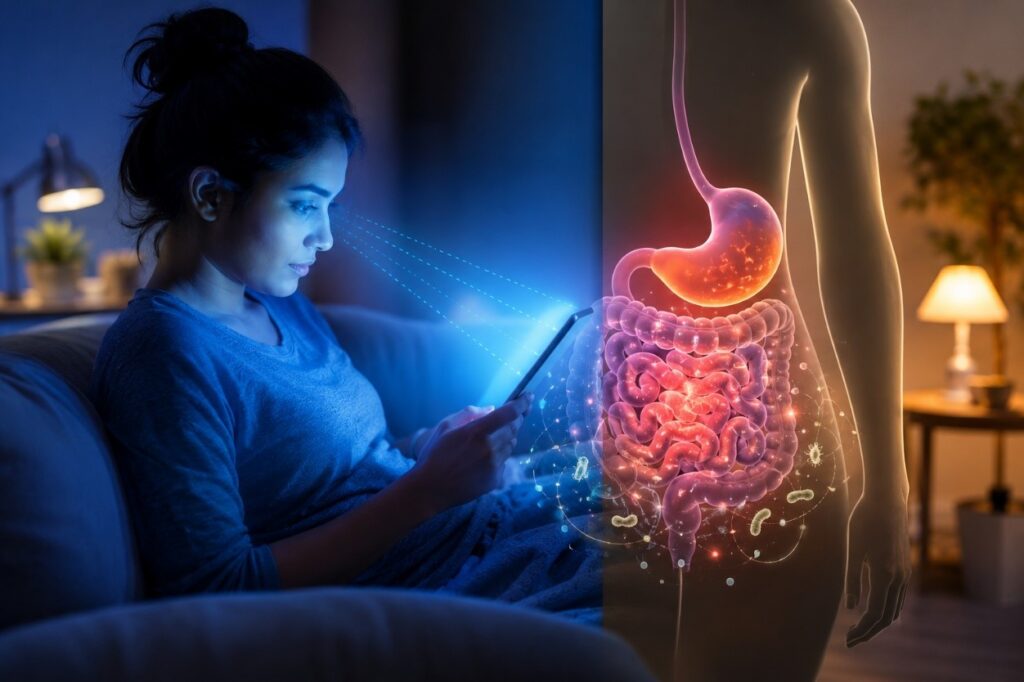
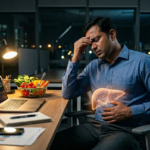
It’s 11:30 PM in a quiet apartment in Balewadi. The lights are off, but the room is bathed in an eerie, flickering blue glow. Rahul, a senior software engineer working near the Hinjawadi IT Park, is finishing “just one more episode” on his tablet while mindlessly scrolling through his phone.
Despite having a light dinner near the Wakad Showroom area hours ago, his stomach feels like a drum. He’s tight, uncomfortable, and “gassy.” He blames the spicy misal he had for lunch, but the true culprit might not be in his plate—it might be in his eyes.
At Dr. Bhate’s Gastro Liver Clinic, we are seeing a surge in “Digital Dyspepsia.” While most Punekars know that late-night screen time ruins sleep, very few realize that the blue light from your iPhone or laptop is directly “stalling” your intestines.
The “Gut-Clock” Connection: How Your Eyes Feed Your Stomach
Your digestive system doesn’t just run on food; it runs on a schedule. This is known as Chrononutrition. According to research curated by MyCircadianClock, every organ in your body, including your liver and colon, follows a 24-hour internal rhythm.
When blue light hits your retinas late at night, it sends a high-priority signal to your brain: “The sun is up! Stay alert!” This suppresses Melatonin. While we know melatonin as the “sleep hormone,” it is also a massive regulator of gut motility.
The result? Your brain tells your gut to stop digesting. The food from your dinner—perhaps that heavy meal you grabbed near the Mumbai-Bangalore Bypass—sits stagnant. It begins to ferment, creating gas, pressure, and that dreaded late-night bloating.
Blue Light vs. The Microbiome: A Silent War
The ZOE Gut Health study has shown that our gut microbiome—the trillions of bacteria living inside us—also has a circadian rhythm. Some bacteria are “daytime workers” (helping with nutrient absorption), while others are “night-shift workers” (repairing the gut lining).
When you disrupt your sleep-wake cycle with excessive screen time:
- Microbial Dysbiosis: The “good” bacteria get confused and sluggish.
- Increased Inflammation: This can exacerbate conditions like Chronic Liver Disease or Pancreatitis.
- Leaky Gut: Poor sleep quality weakens the gut barrier, leading to systemic issues.
For our patients in Pimpri-Chinchwad and Baner, the stress of the “always-on” IT culture combined with blue light exposure is creating a perfect storm for irritable bowel symptoms.
The Pune Lifestyle: A Digestion Disaster?
Living in a hub like Pune means long commutes and high-pressure jobs. If you are stuck in traffic near Ceratec Tiles India Pvt Ltd in Ambegaon or the Katraj D-Mart crawl, you are likely using your phone to pass the time.
This constant “micro-stress” combined with blue light keeps your body in a “Fight or Flight” mode. In this state, blood is diverted away from your digestive organs to your muscles and brain. This is why you might feel bloated even if you eat “healthy” salads.
3 Tips to Protect Your Gut from Your Gadgets
- The “Amber” Sunset Rule
By 8:00 PM, your home should transition to warm lighting. Use “Night Mode” on your devices to filter out blue light. This allows your liver to begin its natural detoxification cycle, a process vital for those managing Liver Specialist recommendations.
- The 30-Plant Challenge
To combat the damage of a disrupted rhythm, focus on Microbiome Diversity. As suggested by the Microsetta Initiative, aim for 30 different types of plants a week. Whether it’s local palak from the Balewadi market or seeds and nuts, variety strengthens the gut against the stresses of a digital life.
- Respect the “Fast”
Give your gut at least 12 hours of break. If you finish dinner at 9:00 PM after a long day in Hinjawadi, don’t eat again until 9:00 AM. This gives your “Migrating Motor Complex” (the gut’s housekeeper) time to sweep away undigested food and bacteria.
When Should You See a Specialist?
Sometimes, bloating isn’t just about screen time. It can be a symptom of underlying GI issues that require professional intervention. At Dr. Bhate’s Gastro Liver Clinic, we follow the Indian GI Clinical Guidelines (ISG) to provide precision care.
If your bloating is accompanied by:
- Sudden weight loss
- Persistent pain in the upper abdomen (which could indicate Pancreatitis)
- Yellowing of the eyes or skin (requiring a Hepatologist)
- Severe acid reflux
…it is time to step away from the screen and step into our clinic. Whether it is a routine check-up or a complex Liver Transplant consultation, our team is equipped with the latest diagnostic tools, including advanced Endoscopy (as per ASGE standards).
A Message from Dr. Bhate’s Clinic
Your digestive health is the foundation of your overall well-being. In the digital age, “watching what you eat” now includes “watching how much you watch.”
If you are struggling with persistent digestive issues, don’t just “scroll” for answers. Consult the experts who understand the unique lifestyle challenges of Punekars.
Our Locations
Balewadi Clinic (Main): Third floor, Expert Superspeciality Clinic, near Lakshmi Mata Mandir, Laxmi Nagar, Balewadi Gaon, Balewadi, Pune 411045 📞 Call: +91-9923339241
Pimpri Clinic: Gera Imperium Oasis, B 209, near Finolex Chowk, near Moolchand, Morewadi, Pimpri Colony, Pimpri-Chinchwad, Maharashtra 411018 📞 Call: 77700 82211
Services Offered:
- Liver Specialist Consultations
- Hepatologist Care
- Liver Transplant Evaluations
- Chronic Liver Disease Management
- Pancreatitis Treatment
Recent Posts
-
 Fibermaxxing for Indians: Why Varan Bhaat and Ghee are the Original Gut Superfoods By Dr. Bhate’s Gastro Liver Clinic
 -
 Alcohol and the “Social” Liver: How Weekend Drinks in Balewadi High Street Impact Your 10-Year Health
 -
 Grapefruit is the Enemy: 5 Surprising Foods to Avoid While Taking Post-Transplant Meds
 -
 The Donor Hero: A Guide for Pune Families Considering Living Donor Liver Transplantation
 -
 The “Silent” Yellowing: Why Early Liver Disease Often Has No Symptoms Until It’s Urgent.