Introduction
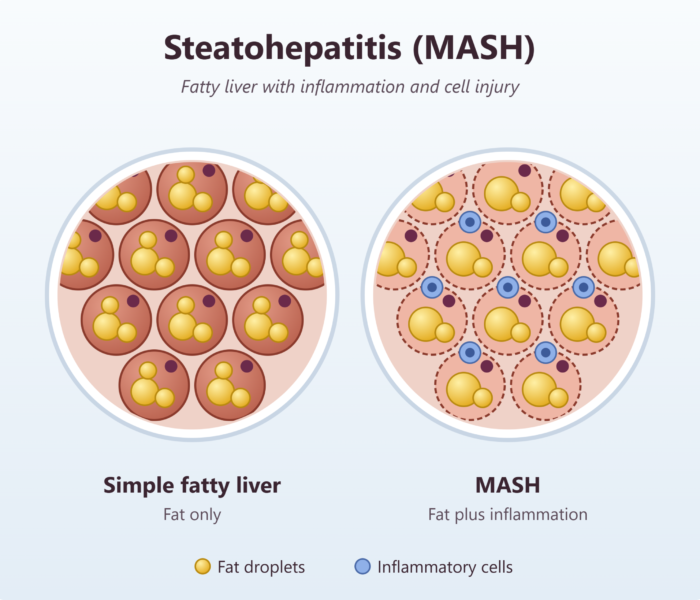
Steatohepatitis is an advanced form of fatty liver disease in which excess fat accumulation triggers inflammation and liver cell injury. It was previously known as non-alcoholic steatohepatitis (NASH) and is now commonly called metabolic dysfunction-associated steatohepatitis (MASH). Unlike simple fatty liver, this condition involves active inflammation and may progress to liver fibrosis, cirrhosis or other complications if left unmanaged.
Symptoms
MASH often develops without noticeable symptoms. Possible signs include:
-
Persistent fatigue
-
Discomfort in the upper right abdomen
-
General weakness
-
Unexplained weight loss in some cases
-
Symptoms of advanced liver disease, such as jaundice or abdominal swelling
Diagnosis & Treatment
Evaluation may include liver function tests, abdominal ultrasound, FibroScan, blood-based fibrosis assessments and other imaging tests. A liver biopsy may be recommended in selected cases.
Treatment focuses on sustained weight management, a balanced diet, regular exercise and control of diabetes, cholesterol and other metabolic risk factors. Early-stage inflammation and liver injury may improve with appropriate management, although established scarring may not fully reverse.
Why Choose Dr. Prasad Bhate?
Dr. Prasad Bhate is a gastroenterologist in Pune with a special interest in hepatology and liver diseases. He evaluates fatty liver conditions, assesses liver health and helps patients plan appropriate treatment and follow-up.
-
DM-qualified gastroenterologist
-
10 years of experience
-
Special interest in liver diseases
-
Personalised treatment and follow-up
Recent Research Data
The 2024 EASL-EASD-EASO clinical practice guidelines recommend sustained weight loss for people with MASLD and excess weight. A reduction of 7–10% of body weight may improve liver inflammation, while a reduction of 10% or more may improve fibrosis.
Patient Trust
Regular monitoring, appropriate liver assessment and personalised lifestyle guidance are important in managing MASH and reducing the risk of disease progression.
FAQs
1. What is the difference between fatty liver and MASH?
Ans: Simple fatty liver involves fat accumulation, while MASH also includes liver inflammation and cell injury.
2. What causes MASH?
Ans: It is commonly associated with obesity, insulin resistance, type 2 diabetes, high cholesterol and other metabolic risk factors.
3. Can MASH be reversed?
Ans: Early-stage MASH may improve with sustained lifestyle changes and appropriate medical management. Advanced fibrosis may be harder to reverse.
4. How is MASH diagnosed?
Ans: Blood tests, ultrasound, FibroScan and other fibrosis assessments may be used. A liver biopsy may be required in selected cases.
5. Can MASH lead to liver cirrhosis?
Ans: Yes. Persistent inflammation can lead to fibrosis and, in some patients, progress to cirrhosis.
Consultation & Contact Details
Consult Dr. Prasad Bhate for expert evaluation and management of MASH and other fatty liver conditions in Pune.
Balewadi Clinic: Expert Superspeciality Clinic, 3rd Floor, Near Lakshmi Mata Mandir, Balewadi Gaon, Pune – 411045.
Pimpri-Chinchwad Clinic: Gera Imperium Oasis, B-209, Near Finolex Chowk, Morewadi, Pimpri Colony, Pune – 411018.
Appointment: +91-7770082211
Website: https://www.gastropune.com/