Introduction
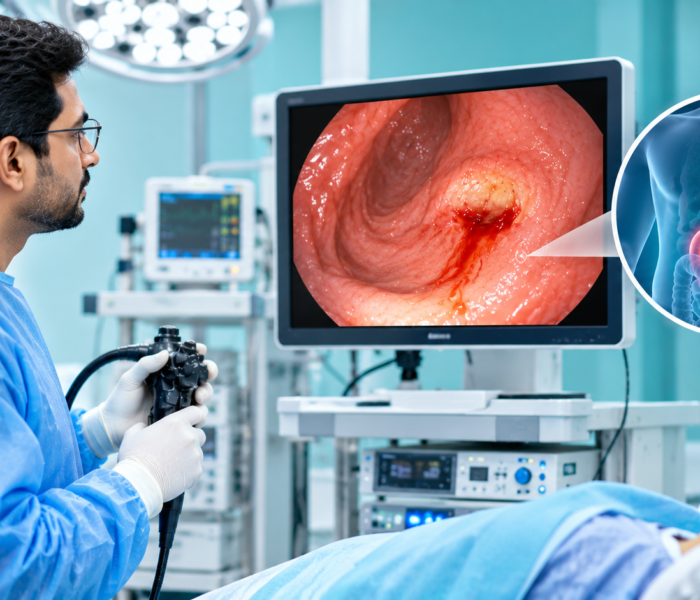
Gastrointestinal bleeding occurs when blood is lost from any part of the digestive tract, including the oesophagus, stomach, small intestine or colon. It may result from bleeding ulcers, oesophageal varices, inflammation or other digestive conditions. Early diagnosis and timely treatment are essential to identify the source and prevent complications.
Symptoms
-
Blood in vomit
-
Black, tarry stools
-
Bright red blood in stools
-
Abdominal pain or discomfort
-
Dizziness or fainting
-
Weakness and fatigue
-
Unexplained anaemia
Diagnosis & Treatment
Diagnosis may involve blood tests, upper GI endoscopy, colonoscopy and imaging investigations. Treatment depends on the bleeding source and may include medications, endoscopic clipping, injection therapy, thermal coagulation or variceal band ligation.
Why Choose Dr. Prasad Bhate?
-
10 years of gastroenterology experience
-
DM in Gastroenterology
-
Expertise in diagnostic and therapeutic endoscopy
-
Experience in managing complex digestive conditions
-
Patient-focused diagnostic and treatment approach
Recent Research Data
The 2026 European Society of Gastrointestinal Endoscopy (ESGE) guidelines highlight advances in endoscopic diagnosis and treatment of upper GI bleeding, including updated recommendations for clips, thermal therapy and other bleeding-control techniques.
Dr. Prasad Bhate focuses on identifying the source of gastrointestinal bleeding through appropriate investigations and providing evidence-based treatment.
FAQs
1. What are the common causes of GI bleeding?
Ans: Common causes include stomach ulcers, gastritis, oesophageal varices, intestinal inflammation and colorectal conditions.
2. What are the warning signs of gastrointestinal bleeding?
Ans: Blood in vomit, black stools, rectal bleeding, dizziness and unexplained weakness are important warning signs.
3. How is GI bleeding diagnosed?
Ans: Diagnosis may involve blood tests, upper GI endoscopy, colonoscopy and imaging based on the suspected bleeding source.
4. Can gastrointestinal bleeding be treated through endoscopy?
Ans: Yes, many bleeding sources can be treated using endoscopic techniques such as clipping, injection therapy and band ligation.
5. Is gastrointestinal bleeding a medical emergency?
Ans: Yes. Heavy bleeding, vomiting blood, black stools with dizziness or fainting require immediate emergency medical attention.
Consult Dr. Prasad Bhate for expert gastrointestinal bleeding evaluation and treatment in Pune.
Balewadi Clinic: Expert Superspeciality Clinic, 3rd Floor, Near Lakshmi Mata Mandir, Balewadi Gaon, Pune – 411045.
Pimpri-Chinchwad Clinic: Gera Imperium Oasis, B-209, Near Finolex Chowk, Morewadi, Pimpri Colony – 411018.
Appointment: +91-7770082211
Website: https://www.gastropune.com/