Introduction
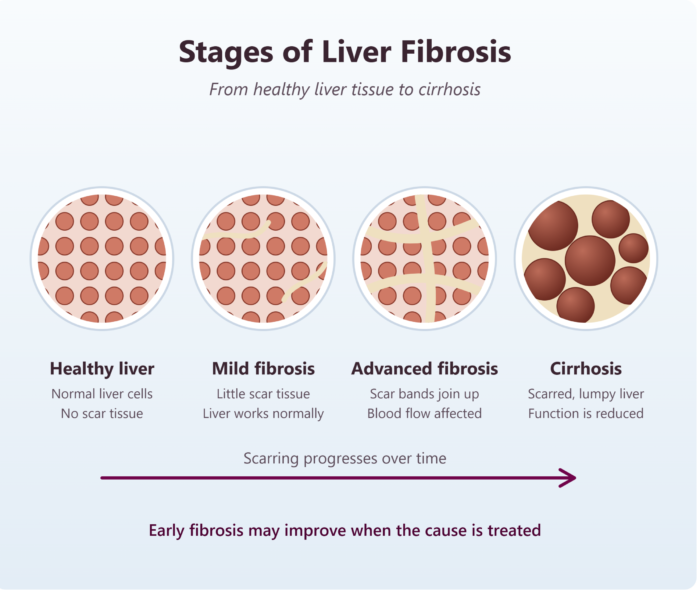
Liver fibrosis occurs when persistent liver inflammation or injury causes scar tissue to build up around liver cells and blood vessels. It commonly develops due to conditions such as MASH (previously called NASH), chronic hepatitis and other long-term liver diseases. In early stages, the liver may continue to function normally despite scarring. Without appropriate management, fibrosis can progress to advanced scarring and cirrhosis.
Symptoms
Early liver fibrosis often causes no noticeable symptoms. As the condition progresses, some people may experience:
-
Persistent fatigue
-
Weakness
-
Discomfort in the upper right abdomen
-
Loss of appetite
-
Unexplained weight changes
Diagnosis & Treatment
Evaluation may include liver function tests, abdominal ultrasound, FibroScan, blood-based fibrosis scores and other imaging investigations. A liver biopsy may be recommended in selected cases.
Treatment focuses on identifying and managing the underlying cause, controlling metabolic risk factors and avoiding further liver injury. In some patients, early-to-moderate fibrosis may regress when the underlying condition is effectively managed. Sustained weight loss, when appropriate, can help improve liver health.
Why Choose Dr. Prasad Bhate?
Dr. Prasad Bhate is a gastroenterologist in Pune with a special interest in hepatology and liver diseases. He evaluates liver conditions, assesses fibrosis and helps patients plan suitable treatment and monitoring.
Recent Research Data
The 2024 EASL-EASD-EASO guidelines recommend a sustained weight reduction of at least 10% in adults with MASLD and excess weight to help improve liver fibrosis. They also recommend a stepwise assessment using blood-based scores such as FIB-4 and liver elastography to evaluate fibrosis risk.
FAQs
1. What is liver fibrosis?
Ans: Liver fibrosis is the buildup of scar tissue caused by repeated or long-term liver injury and inflammation.
2. What causes liver fibrosis?
Ans: Common causes include MASH, chronic viral hepatitis, alcohol-related liver disease and other long-term liver conditions.
3. Can liver fibrosis be reversed?
Ans: Some early stages of fibrosis may regress when the underlying cause is effectively treated. Advanced scarring may be difficult to reverse.
4. How is liver fibrosis diagnosed?
Ans: Blood-based fibrosis scores, FibroScan, liver elastography and other imaging tests help assess liver scarring. A biopsy may be advised in selected cases.
5. Does liver fibrosis always lead to cirrhosis?
Ans: No. Appropriate treatment and management of the underlying cause can help slow or prevent progression.
Consult Dr. Prasad Bhate for expert evaluation and management of liver fibrosis in Pune.
Balewadi Clinic: Expert Superspeciality Clinic, 3rd Floor, Near Lakshmi Mata Mandir, Balewadi Gaon, Pune – 411045.
Pimpri-Chinchwad Clinic: Gera Imperium Oasis, B-209, Near Finolex Chowk, Morewadi, Pimpri Colony – 411018.
Appointment: +91-7770082211
Website: https://www.gastropune.com/