Introduction
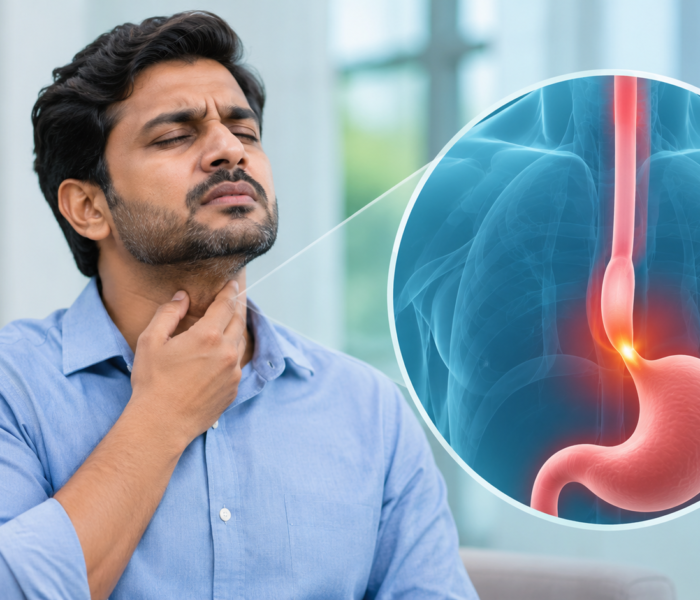
Esophageal motility disorders affect the normal movement of food from the esophagus to the stomach. Conditions such as achalasia can cause difficulty swallowing, food regurgitation and chest discomfort, affecting everyday eating and digestion.
Symptoms
* Difficulty swallowing food or liquids
* Food coming back into the mouth
* Chest pain or discomfort
* Heartburn and regurgitation
* Unexplained weight loss
* Sensation of food getting stuck in the throat
Diagnosis & Treatment
Diagnosis may involve upper GI endoscopy, barium swallow studies and esophageal manometry. Treatment depends on the underlying condition and may include medications, pneumatic dilation, botulinum toxin injection or advanced endoscopic procedures such as POEM.
Why Choose Dr. Prasad Bhate?
* 10 years of gastroenterology experience
* DM in Gastroenterology
* Expertise in diagnostic and therapeutic endoscopy
* Special interest in functional digestive disorders
* Patient-focused treatment approach
Recent Research Data
A 2025 review published in Mayo Clinic Proceedings highlights high-resolution esophageal manometry as a key diagnostic tool for identifying and classifying esophageal motility disorders.
FAQs
1) What is achalasia?
Ans: Achalasia is a rare disorder in which the lower esophageal sphincter does not relax properly, making swallowing difficult.
2) What are the common symptoms of esophageal motility disorders?
Ans: Difficulty swallowing, food regurgitation, chest discomfort and heartburn are common symptoms.
3) How is achalasia diagnosed?
Ans: Diagnosis may involve upper GI endoscopy, barium swallow and high-resolution esophageal manometry.
4) Can achalasia be treated?
Ans: Yes. Treatment options include pneumatic dilation, botulinum toxin injections, POEM and surgical myotomy, depending on the patient’s condition.
5) Can achalasia come back after treatment?
Ans: Symptoms can return over time in some patients, especially after dilation or botulinum toxin injection. Regular follow-up with your gastroenterologist helps in detecting and treating it early.
Consult Dr. Prasad Bhate for expert esophageal motility disorder and achalasia care in Pune.
Balewadi Clinic: Expert Superspeciality Clinic, 3rd Floor, Near Lakshmi Mata Mandir, Balewadi Gaon, Pune – 411045.
Pimpri-Chinchwad Clinic: Gera Imperium Oasis, B-209, Near Finolex Chowk, Morewadi, Pimpri Colony – 411018.
Appointment: +91-7770082211
https://www.gastropune.com/